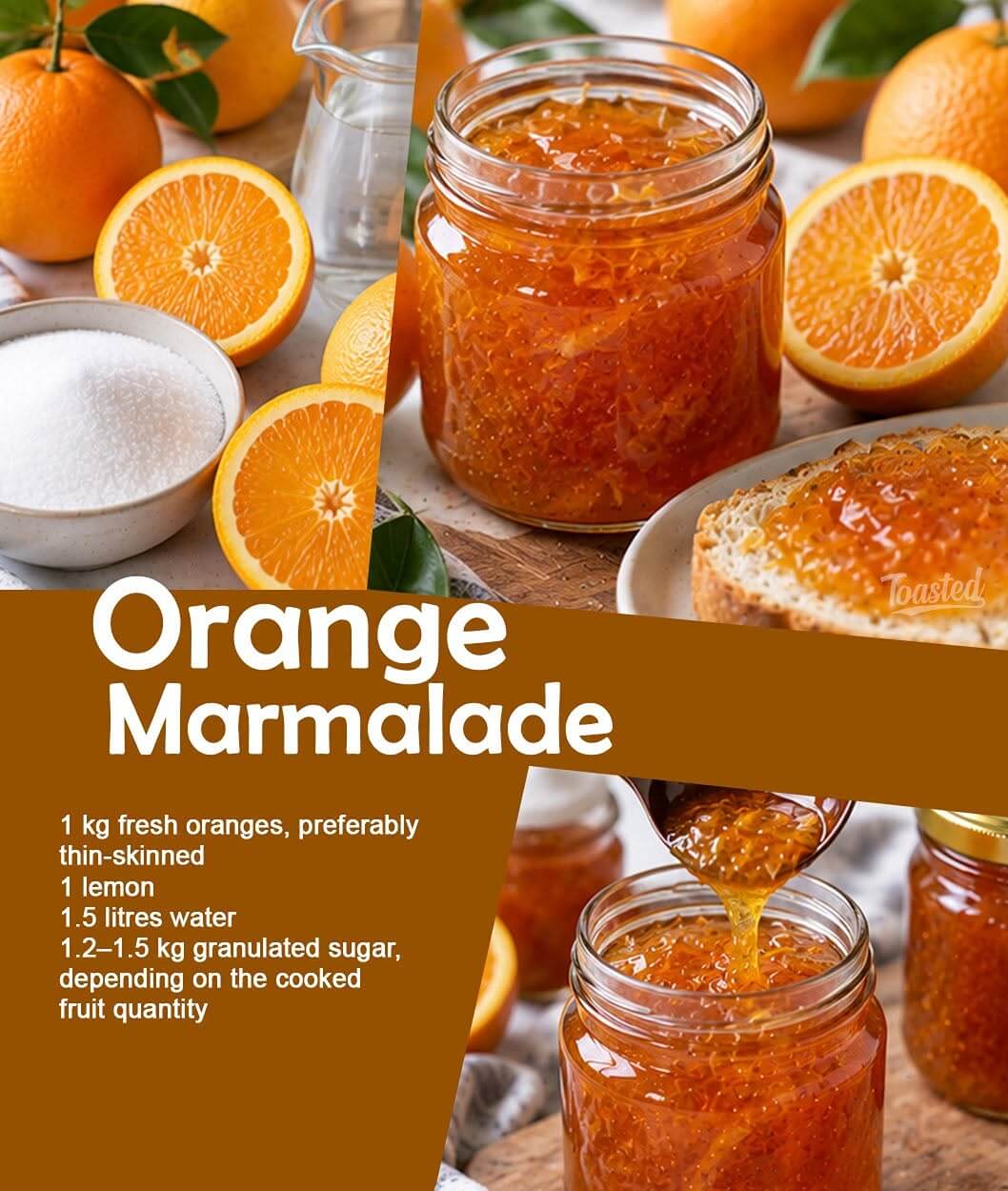
Bright, bittersweet, and beautifully fragrant, this Classic Orange Marmalade is the kind of pantry staple that makes ordinary toast feel special. Thin ribbons of tender citrus peel are suspended in a glossy, jewel-like preserve, with fresh orange juice bringing plenty of sunny flavor and the lemon adding just enough sharpness to keep the sweetness balanced. The natural pectin from the reserved seeds and membranes helps create that classic soft-but-set marmalade texture.
This is a slower, old-fashioned recipe, but the payoff is worth it. The key is patience: the peel needs to become completely tender before the sugar goes in. I especially like recipes like this for weekend kitchen projects; once the jars are filled, you have a homemade preserve ready for toast, biscuits, scones, yogurt, or a quick glaze. It is the sort of recipe that feels equally at home in a farmhouse kitchen or a busy family pantry.
Love this recipe? Pin it to your Breakfast and Brunch board on Pinterest so you don’t lose it!
Why You’ll Love This Recipe
- Bright Citrus Flavor: Fresh oranges provide a sunny, aromatic flavor balanced by tart lemon.
- Classic Texture: Thin ribbons of peel give every spoonful that traditional marmalade character.
- Simple Ingredients: There are no specialty thickeners; the fruit supplies natural pectin.
- Make-Ahead Friendly: Once properly jarred, homemade marmalade gives you a useful pantry staple for future breakfasts.
- More Than Toast: Use it with biscuits, scones, yogurt, oatmeal, or as a citrusy glaze.
Ingredients
Citrus
1 kg oranges, preferably thin-skinned
1 lemon
Marmalade
1.5 liters water
1.35 kg granulated sugar
Instructions
- Prepare the citrus. Wash the oranges and lemon thoroughly. Cut them in half, squeeze out the juice, and collect any seeds and membranes in a small bowl. The seeds and membranes contain natural pectin that helps the marmalade set.
- Slice the peel. Using a sharp knife, cut the orange and lemon peel into very thin strips. Add the peel, fresh juice, and water to a large, heavy-bottomed saucepan.
- Add the pectin. Place the reserved seeds and membranes in a small piece of muslin or cheesecloth. Tie it securely into a pouch, then add it to the saucepan.
- Soften the peel. Bring the mixture to a boil, then reduce the heat and simmer gently for 45–60 minutes. The peel should be completely tender, and the liquid should have reduced noticeably.
- Extract the pectin. Remove the muslin pouch. Carefully press it against the side of the saucepan with a spoon to release the pectin-rich liquid, then discard the pouch.
- Add the sugar. Make sure the peel is fully tender before adding the sugar. Stir over low heat until the sugar has completely dissolved.
- Boil the marmalade. Increase the heat and bring the mixture to a vigorous boil. Continue cooking for about 15–25 minutes, stirring occasionally and watching closely to prevent scorching.
- Check the set. Place a small spoonful of marmalade on a chilled plate. Let it cool briefly, then gently push it with your finger. If the surface wrinkles, the marmalade is ready. If it remains runny, boil for another 2–3 minutes and test again.
- Distribute the peel. Remove the saucepan from the heat and let the marmalade stand for 5–10 minutes. This allows the peel to distribute evenly instead of floating or settling.
- Jar the marmalade. Carefully ladle the hot marmalade into hot, sterilized jars and seal according to your preferred safe canning procedure.
Cooking Notes
- Do not rush the first simmer. The peel must be completely tender before sugar is added. Sugar can toughen citrus peel and prevent it from softening properly.
- Use thin-skinned oranges when possible. They provide a good balance of peel, juice, and pith.
- Watch the boil closely. Marmalade can catch on the bottom of the pan as it concentrates.
- The wrinkle test is important. Marmalade continues to thicken as it cools, so avoid boiling it excessively in an attempt to achieve a very firm set.
- For a softer marmalade, stop cooking as soon as the chilled-plate test shows a gentle wrinkle.
- For a less sweet preserve, the source recipe allows approximately 1.2–1.5 kg of sugar depending on the amount of cooked fruit. Reducing sugar can affect both preservation and setting, so follow an appropriate tested preserving method if storing the marmalade long term.
Nutrition
Estimated using the recipe’s midpoint of 1.35 kg sugar and approximately 2.4 kg finished marmalade. Because final evaporation varies with pan size, fruit juiciness, and cooking time, actual values will vary.
Yields: About 120 servings at approximately 1 tbsp (20g) each
- Calories: 45 kcal
- Fat: 0.1 g
- Carb: 11.8 g
- Protein: 0.1 g
FDA Daily Value considerations: The primary nutritional consideration is added sugar. At roughly 10–11 g of added sugar per tablespoon, one serving provides approximately 20% of the 50 g Daily Value for added sugars, placing it around the FDA threshold for a “High” designation. The marmalade is naturally very low in fat and sodium.
FAQ
- Can I use thick-skinned oranges? Yes, but the peel may be more bitter and contain more pith. Thin-skinned oranges are preferable for the texture described in this recipe.
- Why is my marmalade not setting? Return it to a vigorous boil for a few additional minutes, then repeat the chilled-plate test. Overcooking can produce a very firm or sticky marmalade, so test frequently.
- Can I add the sugar earlier? No. Wait until the citrus peel is completely tender. Adding sugar too early can toughen the peel and interfere with softening.
- Why do I let the marmalade stand before filling the jars? The 5–10 minute rest helps the peel remain evenly distributed throughout the marmalade instead of floating toward the top.
- Can I reduce the sugar? The source recipe permits 1.2–1.5 kg depending on the cooked fruit quantity. Because sugar contributes to both preservation and texture, use a tested preserving recipe if you plan to make further reductions or store the marmalade at room temperature.
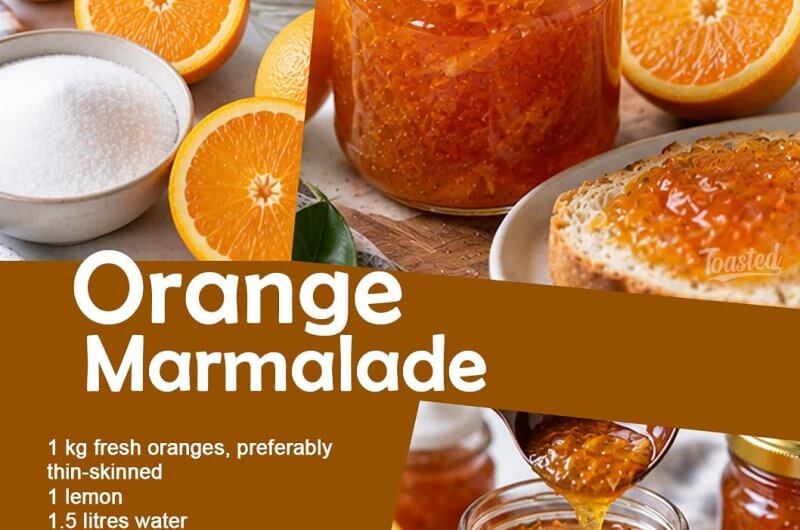
Classic Orange Marmalade
Course: BreakfastCuisine: AmericanDifficulty: Easy120
servings25
minutes1
hour20
minutes45
kcalA traditional citrus marmalade made with fresh oranges, lemon, thinly sliced peel, and granulated sugar, naturally set with pectin from the fruit seeds and membranes.
Ingredients
- Citrus
1 kg oranges, preferably thin-skinned
1 lemon
- Marmalade
1.5 liters water
1.35 kg granulated sugar
Directions
- Prepare the citrus. Wash the oranges and lemon thoroughly. Cut them in half, squeeze out the juice, and collect any seeds and membranes in a small bowl. The seeds and membranes contain natural pectin that helps the marmalade set.
- Slice the peel. Using a sharp knife, cut the orange and lemon peel into very thin strips. Add the peel, fresh juice, and water to a large, heavy-bottomed saucepan.
- Add the pectin. Place the reserved seeds and membranes in a small piece of muslin or cheesecloth. Tie it securely into a pouch, then add it to the saucepan.
- Soften the peel. Bring the mixture to a boil, then reduce the heat and simmer gently for 45–60 minutes. The peel should be completely tender, and the liquid should have reduced noticeably.
- Extract the pectin. Remove the muslin pouch. Carefully press it against the side of the saucepan with a spoon to release the pectin-rich liquid, then discard the pouch.
- Add the sugar. Make sure the peel is fully tender before adding the sugar. Stir over low heat until the sugar has completely dissolved.
- Boil the marmalade. Increase the heat and bring the mixture to a vigorous boil. Continue cooking for about 15–25 minutes, stirring occasionally and watching closely to prevent scorching.
- Check the set. Place a small spoonful of marmalade on a chilled plate. Let it cool briefly, then gently push it with your finger. If the surface wrinkles, the marmalade is ready. If it remains runny, boil for another 2–3 minutes and test again.
- Distribute the peel. Remove the saucepan from the heat and let the marmalade stand for 5–10 minutes. This allows the peel to distribute evenly instead of floating or settling.
- Jar the marmalade. Carefully ladle the hot marmalade into hot, sterilized jars and seal according to your preferred safe canning procedure.