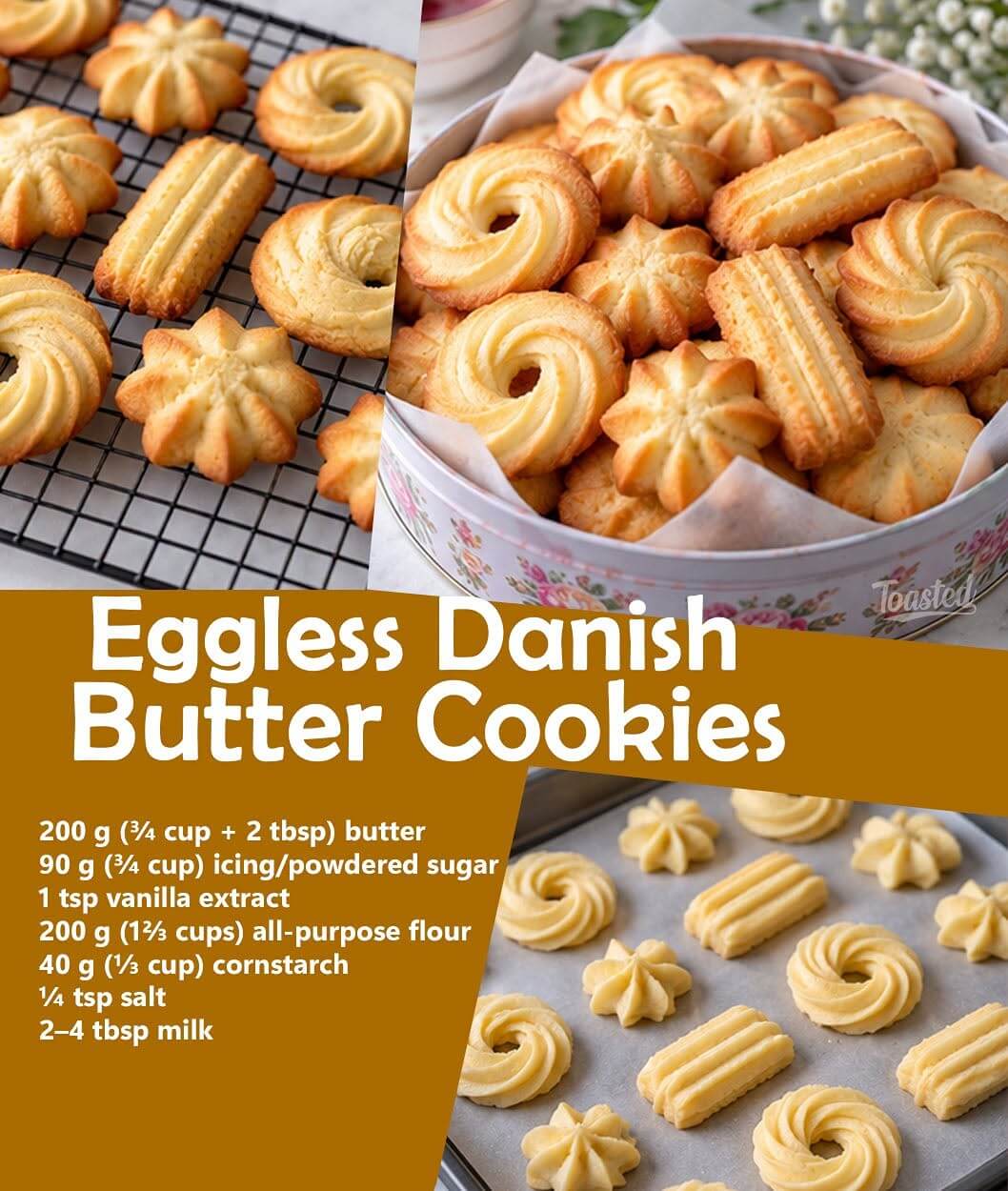
These Eggless Danish Butter Cookies are the kind of classic bake that earns a permanent spot in the cookie tin. They have crisp, lightly golden edges, delicate ridges, and a tender, melt-in-your-mouth center thanks to the combination of well-whipped butter and cornstarch. The vanilla gives them a simple, buttery aroma that feels wonderfully nostalgic without being overly sweet.
The dough is soft enough to pipe into pretty rings, rosettes, or fingers, yet it firms up beautifully after a short chill. I especially like this recipe for holiday cookie trays and afternoon coffee because it looks bakery-worthy without requiring complicated ingredients. The key is using properly softened butter, whipping it until genuinely light and fluffy, and adding only enough milk to make the dough pipeable.
These are delicate cookies, so don’t rush the cooling step. They will be soft when they first come out of the oven and become more stable as they cool. Keep the centers pale and the edges just lightly golden for that classic Danish-style texture.
Love these buttery cookies? Pin this recipe to your Dessert or Cookie board on Pinterest so you don’t lose it!
Why You’ll Love This Recipe
- Beautiful Without Fuss: Pipe the dough into rings, rosettes, or fingers for an elegant bakery-style finish.
- No Eggs Required: A simple option when you’re baking without eggs.
- Melt-in-Your-Mouth Texture: Cornstarch helps create the delicate crumb that makes these cookies so appealing.
- Classic Butter Flavor: Vanilla and plenty of butter create a familiar, rich cookie flavor without complicated additions.
- Perfect for Cookie Tins: Once completely cooled, the cookies are easy to store and serve alongside coffee or tea.
Ingredients
Butter Cookie Dough
200 g (14 tbsp) unsalted butter, softened
90 g (¾ cup) powdered sugar
1 tsp vanilla extract
200 g (1⅔ cups) all-purpose flour
40 g (⅓ cup) cornstarch
¼ tsp salt
2-4 tbsp milk, as needed
Instructions
- Cream the butter and sugar. Beat the softened butter and powdered sugar for 3-4 minutes, until very pale, smooth, and fluffy. Beat in the vanilla extract until evenly combined.
- Combine the dry ingredients. Sift the flour, cornstarch, and salt together in a separate bowl.
- Make the dough. Add the dry ingredients gradually to the butter mixture, mixing gently after each addition. Stop mixing as soon as a soft dough forms.
- Adjust the consistency. Add milk 1 tbsp at a time until the dough is soft enough to pipe through a large open-star tip while still holding its shape. You may not need all 4 tbsp.
- Pipe the cookies. Transfer the dough to a sturdy piping bag fitted with a large open-star nozzle. Pipe rings, rosettes, or short fingers onto a parchment-lined baking sheet, leaving a little space between each cookie.
- Chill. Refrigerate the piped cookies for 15-20 minutes. This helps the butter firm up and keeps the decorative ridges defined during baking.
- Bake. Bake at 170°C / 340°F for 12-16 minutes, until the edges are lightly golden. The centers should remain pale; avoid baking until deeply browned.
- Cool. Let the cookies rest on the baking sheet for about 5 minutes, then carefully transfer them to a wire rack. Cool completely before storing.
Cooking Notes
Use softened, not melted, butter: Butter should be pliable enough to beat easily but should not look oily or liquid.
Don’t add too much milk: Start with 2 tbsp and increase gradually. A dough that is too wet will spread and lose its piped definition.
Use a sturdy piping bag: This dough is thicker than many cake-batter-style cookie doughs, so a strong bag and large star nozzle make piping much easier.
Chilling matters: Refrigerating the shaped cookies helps preserve the ridges and decorative shapes.
For the best texture: Remove the cookies when only the edges are lightly golden. Overbaking can make the centers dry and reduce the delicate, buttery texture.
Storage: Store completely cooled cookies in an airtight container at room temperature for about 1 week.
Nutrition
Estimated Nutrition per Serving
Yield: 12 servings, approximately 2 cookies per serving
- Calories: 225 kcal
- Fat: 13.8 g
- Carb: 23.4 g
- Protein: 2.0 g
These estimates are based on the listed ingredients and approximately 3 tbsp of milk; actual values will vary with the amount of milk used and cookie size. The batch provides approximately 2,700 kcal before baking, with an estimated finished yield of about 450-500 g.
FDA Daily Value check: Saturated fat is estimated at about 8.6 g per serving, or approximately 43% of the 20 g Daily Value, so it is High in saturated fat. For a lower-saturated-fat version, part of the butter would need to be replaced with an appropriate lower-saturated-fat baking fat, although this may change the classic Danish-cookie texture. Estimated added sugar is about 7.5 g per serving, approximately 15% of the 50 g Daily Value. Sodium is relatively low at approximately 50 mg per serving.
Recipe Science
This recipe uses a classic butter-cookie structure built from creamed butter, powdered sugar, flour, cornstarch, and a small amount of milk. There are no eggs, so the butter provides most of the richness and structure while the flour supplies the main framework.
Creaming the butter thoroughly incorporates air and creates a lighter texture, while cornstarch reduces the strength of the flour network. This combination contributes to the characteristic delicate, tender crumb. Chilling the piped dough firms the butter before baking, helping the decorative ridges remain visible rather than spreading excessively.
The relatively short baking time preserves the pale, buttery center while allowing the edges to develop light browning. The recipe is also adaptable to different piped shapes and can be made without eggs, making it useful for households avoiding eggs in baked goods. Store the finished cookies airtight and allow them to cool completely before sealing.
From a nutrition standpoint, the principal consideration is saturated fat from the butter. A serving is estimated to provide more than 20% of the FDA Daily Value for saturated fat; people limiting saturated fat may want to enjoy a smaller portion or modify the fat source.
FAQ
- Can I use melted butter? No. Melted butter will change the dough consistency and make it much harder to pipe. Use softened butter that is pliable but not liquid.
- Why is my dough difficult to pipe? The butter may not have been softened enough, or the dough may be too dry. Add milk gradually, 1 tbsp at a time, until the dough is pipeable but still holds its shape.
- Why did my cookies lose their ridges? The dough may have been too soft, too much milk may have been added, or the shaped cookies may have been baked without chilling. Refrigerate the piped cookies for 15-20 minutes before baking.
- Can I make the cookies ahead? Yes. The shaped cookies can be chilled before baking, making them convenient for preparing ahead of time.
- How do I keep them crisp and delicate? Cool the cookies completely before storing them in an airtight container. Residual warmth can create condensation and soften the cookies.
Conclusion
These Eggless Danish Butter Cookies are a lovely reminder that a short ingredient list can still make something special. Take your time with the butter, don’t overwork the dough, and feel free to make the shapes your own; that’s part of the fun of baking.
What shape would you pipe first: classic rings, pretty rosettes, or simple buttery fingers?
Happy baking,
From my kitchen to yours.

Eggless Danish Butter Cookies
Course: DessertCuisine: AmericanDifficulty: Easy12
servings25
minutes15
minutes225
kcalDelicate, buttery eggless cookies with crisp edges and a tender, melt-in-your-mouth crumb, piped into classic decorative shapes and lightly chilled before baking.
Ingredients
200 g (14 tbsp) unsalted butter, softened
90 g (¾ cup) powdered sugar
1 tsp vanilla extract
200 g (1⅔ cups) all-purpose flour
40 g (⅓ cup) cornstarch
¼ tsp salt
2-4 tbsp milk, as needed
Directions
- Cream the butter and sugar. Beat the softened butter and powdered sugar for 3-4 minutes, until very pale, smooth, and fluffy. Beat in the vanilla extract until evenly combined.
- Combine the dry ingredients. Sift the flour, cornstarch, and salt together in a separate bowl.
- Make the dough. Add the dry ingredients gradually to the butter mixture, mixing gently after each addition. Stop mixing as soon as a soft dough forms.
- Adjust the consistency. Add milk 1 tbsp at a time until the dough is soft enough to pipe through a large open-star tip while still holding its shape. You may not need all 4 tbsp.
- Pipe the cookies. Transfer the dough to a sturdy piping bag fitted with a large open-star nozzle. Pipe rings, rosettes, or short fingers onto a parchment-lined baking sheet, leaving a little space between each cookie.
- Chill. Refrigerate the piped cookies for 15-20 minutes. This helps the butter firm up and keeps the decorative ridges defined during baking.
- Bake. Bake at 170°C / 340°F for 12-16 minutes, until the edges are lightly golden. The centers should remain pale; avoid baking until deeply browned.
- Cool. Let the cookies rest on the baking sheet for about 5 minutes, then carefully transfer them to a wire rack. Cool completely before storing.